



Yoruba language, prominent in West Africa (Nigeria, Benin, Togo), ranks 2nd with 55M speakers globally. Rising translation demand underscores its cultural, and communication significance.
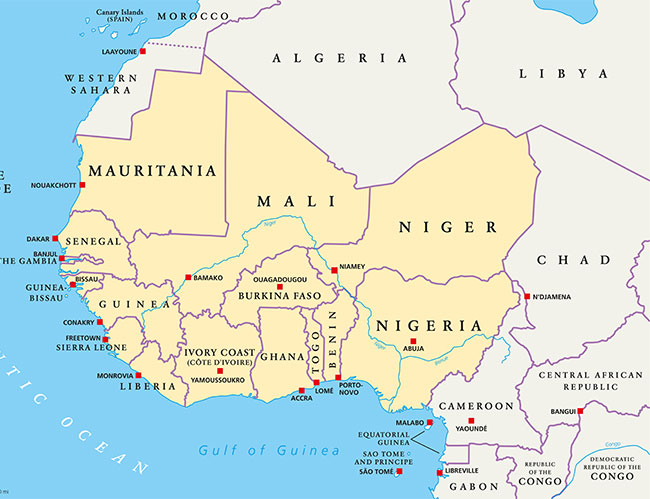
Yoruba is a widely spoken language in West Africa, especially in Nigeria, Benin, and Togo. As the world’s second most-spoken African language at 55 million speakers, the demand for Yoruba translation services is on the rise – emphasizing Yoruba’s critical role in African culture, communication, and international relations.


Pronto stands at the forefront of language translation services, possessing a cadre of Yoruba translation specialists prepared to cater to your specific requirements. From legal affairs and promotional content to educational materials and various business sectors, Pronto’s expertise in Yoruba language translation is adeptly aligned to address a wide array of fields.
Get the Best Translation Services from Our Yoruba Translators
When seeking meticulous translations, native-level ability is crucial.
Pronto’s Yoruba translators are experienced professionals, many of whom are graduates from Nigeria’s top universities. They possess comprehensive knowledge of English, French, and Yoruba and are skilled in technical, medical, and legal terminology, enabling them to offer expert translation services for:
- English to Yoruba translation
- French to Yoruba translation
- Yoruba to English translation
- Yoruba to French translation
Yoruba, pronounced as /jōrùbá/ in the International Phonetic Alphabet, belongs to the Niger-Congo language family and is a primary language in West Africa. With over 50 million native speakers and approximately 5 million individuals who speak it as a second language, it stands as a pluricentric language. The linguistic diversity of Yoruba encompasses countries such as Nigeria, Benin, and Togo. Smaller Yoruba communities are also found in Côte d’Ivoire, Sierra Leone, and The Gambia.
Historical Background:
Yoruba’s historical roots lie within the Yoruboid cluster of the Defoid subbranch of the Benue-Congo branch. Alongside Yoruba, this cluster includes languages like Igala and Itsekiri.
The standardization of written Yoruba began with the translation of the Bible by a Yoruba speaker, Bishop Samuel Crowther, in 1884. This act led to the birth of literary Yoruba, which has grown to include a wealth of literature, such as books, newspapers, pamphlets, and even radio and television broadcasts.
Dialects and Standardization:
Yoruba features a continuum of dialects, broadly categorized into three major geographic areas: Northwest, Southeast, and Central Yoruba. Despite dialectical variations, a standard form has emerged, mainly based on the Ọyọ and Ibadan dialects, which includes features from other dialects and English calques.
The 1966 Yoruba Orthography Committee set the current orthography, which uses the Latin alphabet, modified by digraphs and diacritics. The usage of the Latin alphabet adapted for Yoruba sounds, including diacritics under the letters ẹ, ọ, and ṣ, further solidified its written form.
Literature and Media:
Literary Yoruba has flourished since the 19th century, with authors like Amos Tutuola and D.O. Fagunwa gaining recognition for their work. Fagunwa’s novels, such as Ògbójú Ọdẹ nínú Igbó Irúnmalẹ̀ (“The Brave Hunter in the Forest of 400 Demons”), and the poetry and prose of Adebayo Faleti have played significant roles in shaping Yoruba literature. The richness of Yoruba literature extends beyond fiction, encompassing an extensive array of educational materials, textbooks, and scholarly articles that are taught and referenced across various academic disciplines and levels of education.
Yoruba also plays a significant role in media, including radio, television, and film. It’s extensively used in government administration in southwest Nigeria and serves as a quasi-official language in certain regions.
Prominent Yoruba literature includes works by Amos Tutuola, such as The Palm-Wine Drinkard, and many Yoruba-language newspapers like Alaroye, Alariya, Akede and Irohin Owuro have substantial readership. Radio Lagos 107.5 FM, Agidigbo 88.7 FM Ibadan, Bond FM 92.9 Lagos and NTA Ibadan are examples of leading media outlets that provide content in Yoruba, connecting with a broad audience across the Yoruba-speaking region.
Global Influence and Religion:
Yoruba has extended its influence across the globe, particularly in Afro-Brazilian religion, Candomblé, and the Caribbean religion of Santería, where Yoruba vocabulary is used in liturgical practices. These diasporic communities often employ Yoruba phrases and words in rituals, even if they don’t speak the language fluently.
Yoruglish and Code-Switching:
Educated bilinguals often switch between Yoruba and English, using Yoruba in family and formal tribal meetings, and English in official situations. A creolized form of English, known as Yoruglish, has emerged, blending English and Yoruba grammar and vocabulary.
Dominant Regions:
Yoruba holds a dominant linguistic status in several areas. In Nigeria, Yoruba is the leading language in Ekiti, Lagos, Ogun, Ondo, Osun, Oyo, Kwara, and parts of Kogi. In Benin, Yoruba is spoken in the Ouémé, Plateau, Collines, Borgou, and Donga Departments. In Togo, the language is prevalent in the Plateaux and Centrale Regions.
And as Nigeria continues to emerge as a significant player in the global landscape, the need for English translation to Yoruba (and Yoruba translation to English) will keep expanding.
Looking for expert Yoruba translation services? Pronto can provide everything that you need – tell us more about your project below!
Our Yoruba language translator team is based in Nigeria, but our main offices are in New York City. Our US service area covers:
- Chelsea
- Midtown
- Soho
- Greenwich Village
- All of Manhattan
- Hoboken, NJ
- Jersey City, NJ
- … and anywhere in the US or around the world
Our services are delivered remotely to anywhere worldwide.
Seize the moment – Call us now: +1 646-984-4073!


